Peperomia Rosso in Terrariums: Suitability, Care and Best Use
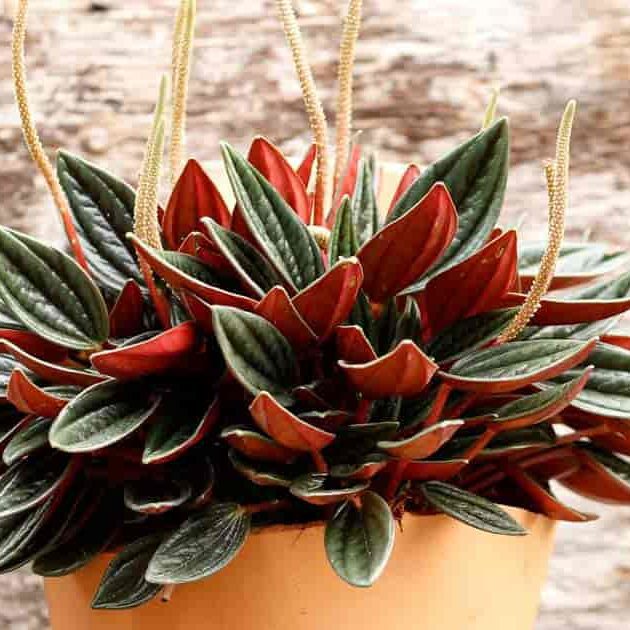
Peperomia Rosso, often sold as Peperomia caperata ‘Rosso’, is a compact foliage plant valued for its deep green textured leaves and rich red undersides. It is frequently recommended for terrariums because it stays relatively tidy, offers strong visual contrast and works well in structured designs. Browse current listings here:
Peperomia Rosso on Etsy.
Peperomia Rosso summary
Peperomia Rosso is one of the more controlled and visually refined plants available for terrariums. Unlike trailing vines or fast-spreading species, it maintains a compact rosette form, making it especially useful in structured designs where scale matters. It is generally well suited to terrariums, but like many peperomias, it does not tolerate excessive moisture.
Terrarium suitability overview
- Closed terrariums: Good fit
- Open terrariums: Good fit
- Small sealed jars: Suitable with care
- Large builds: Excellent structural plant
Common names and plant type
- Botanical name: Peperomia caperata ‘Rosso’
- Common names: Peperomia Rosso, Ripple Peperomia Rosso
- Plant type: Compact tropical foliage plant
Terrarium suitability
Peperomia Rosso is a strong terrarium plant, particularly for small to medium builds where controlled growth is important. Its compact habit means it rarely overwhelms other plants and can be used as either a focal point or a supporting mid-layer plant.
Its main limitation is moisture sensitivity. While it benefits from humidity, it does not tolerate consistently wet substrate. This makes drainage, airflow and watering restraint more important than with plants like moss or Fittonia.
Climate and environmental requirements
- Temperature: 18–26°C (65–80°F)
- Humidity: Moderate to high
- Light: Bright indirect light
It prefers stable indoor warmth and filtered light. Higher humidity improves appearance and helps maintain strong foliage quality, but it is not as dependent on extreme humidity as some classic terrarium plants. That balance is part of what makes it so useful in mixed terrarium builds.
Why Peperomia Rosso works in terrariums
- Compact growth makes it easy to place without overcrowding
- Distinct foliage adds contrast without needing multiple plants
- Does not spread aggressively or climb
- Maintains shape over time with minimal intervention
This makes it particularly valuable in smaller builds where every plant needs to hold its position and contribute visually without taking over.
Where it works well
- Small to medium terrariums
- Structured, layered designs
- Mid-ground or focal planting
- Glass planters with controlled watering
Where it fails
- Waterlogged substrate
- Poor drainage setups
- Very low light environments
- Overcrowded builds with poor airflow
Unlike many classic terrarium plants, the main risk is not lack of humidity but excess moisture. Peperomia Rosso can look stable for long periods before declining, which makes overwatering harder to detect early.
Water and substrate behaviour
- Prefers lightly moist soil
- Should not sit in wet conditions
- Requires well-draining substrate
- Benefits from allowing slight drying between watering
This behaviour is typical of peperomias and is the key factor that separates successful terrarium use from failure. In a balanced terrarium, the plant remains neat and attractive. In a saturated one, it often declines gradually rather than dramatically.
Growth behaviour
- Compact rosette growth
- Slow to moderate expansion
- Rarely invasive or spreading
This makes it one of the better plants for maintaining long-term design integrity. It adds presence without forcing regular reshaping, which is a major advantage in terrariums designed to remain visually stable over time.
Light requirements
- Bright indirect light preferred
- Tolerates moderate light
- Avoid direct sun exposure
In lower light, the plant may survive but growth often slows and the foliage loses some of its intensity. Direct sun, especially through glass, can damage leaves and reduce the clean appearance that makes this plant so attractive.
Compatible plants
Compared to Fittonia, Peperomia Rosso is less moisture dependent and more structurally stable over time. Compared to moss, it adds height and foliage contrast rather than soft surface texture. Compared to vining plants like Pearls and Jade Pothos, it is far easier to control and maintain within a defined space. Compared to Calathea musaica, it is generally more forgiving but less architectural.
Pests and problems
- Fungus gnats in consistently damp soil
- Mealybugs in enclosed or stagnant environments
- Occasional spider mites in drier open setups
- Mould or fungal growth in overly humid, low-airflow terrariums
Pest issues are not especially common with Peperomia Rosso, but they can occur in poorly balanced terrariums. Overly wet substrate and stagnant air increase the likelihood of fungus gnats and mould, while stressed plants are more susceptible to pests like mealybugs.
Lifespan in a terrarium
- Short-term: Excellent
- Long-term: Excellent when watering is controlled
Because it grows slowly and maintains its shape, Peperomia Rosso can remain stable in a terrarium for extended periods, provided excess moisture is avoided.
Maintenance and control
Peperomia Rosso is relatively low-maintenance in a terrarium. Most upkeep is limited to removing damaged leaves, monitoring moisture and ensuring it does not remain too wet for too long.
Unlike trailing or fast-growing plants, it does not usually require pruning to stay attractive. That makes it especially useful in terrariums designed for long-term visual consistency rather than constant reshaping.
Common issues
- Root rot from overwatering
- Leaf decline in poor drainage conditions
- Loss of vibrancy in low light
- Slow decline in stagnant environments
Most issues are the result of environmental imbalance rather than the plant itself being difficult to grow. In practical terms, this means watering habits matter more than almost anything else.