Pearls and Jade Pothos in Terrariums: Suitability, Growth and Best Use
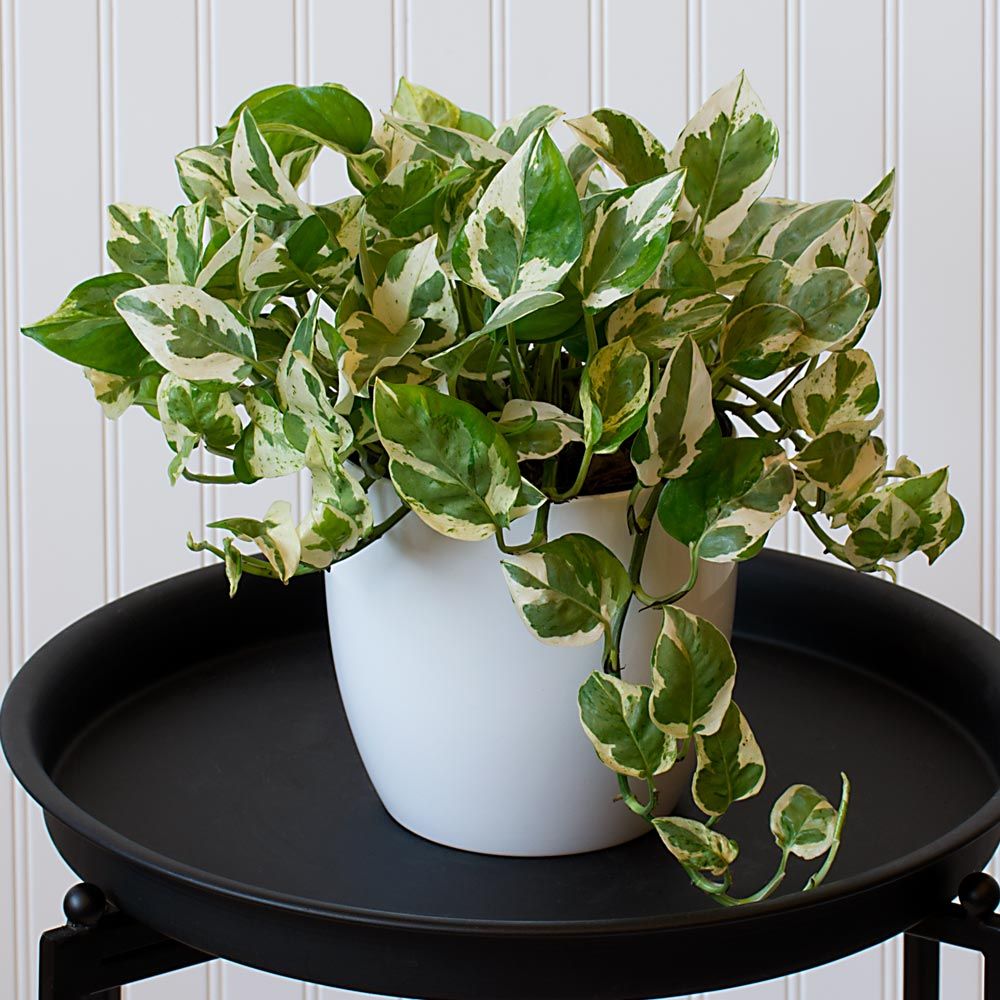
Pearls and Jade Pothos, a variegated form of Epipremnum aureum, is a popular trailing plant with cream, white and green marbled leaves. It is often used in terrarium-style builds because it is attractive, adaptable and easy to source. It is not a perfect enclosed terrarium plant, but it can work well in the right setup and is widely used successfully in real builds. Browse current listings here:
Pearls and Jade Pothos on Etsy.
Pearls and Jade Pothos summary
Pearls and Jade Pothos sits in the middle of the spectrum for terrarium plants. It is not perfectly suited to enclosed builds, but it is widely used and can work well when managed properly. It performs best in open glass planters, terrarium-style displays and larger builds where trailing growth can be pruned regularly. It is much less suitable for small sealed terrariums, where vining stems and moisture balance become harder to control over time.
Terrarium suitability overview
- Closed terrariums: Moderate fit
- Open terrariums: Good fit
- Small sealed jars: Not suitable
- Large glass builds: Works well with pruning
Common names and plant type
- Botanical name: Epipremnum aureum ‘Pearls and Jade’
- Common name: Pearls and Jade Pothos
- Plant type: Variegated tropical vine
Terrarium suitability
Pearls and Jade Pothos is not one of the strongest true terrarium plants, but it is more usable than a strict low score suggests. It performs best in open displays or larger builds where airflow is better and growth can be managed. In enclosed terrariums, it often becomes more work than it is worth, but in the right conditions it can still be successful.
Climate and environmental requirements
- Temperature: 18–29°C (64–84°F)
- Humidity: Moderate to high
- Light: Bright, indirect light
Bright indirect light is especially important for this cultivar because stronger light helps maintain the white and cream variegation. In lower light, the plant may survive, but growth weakens and the leaf pattern can become less defined.
Why Pearls and Jade Pothos is used in terrariums
- Variegated foliage adds contrast and brightness
- Compact leaves look neater than some other pothos types
- Trailing stems soften hardscape and container edges
- It is easier to find and easier to grow than many niche terrarium plants
Where it works well
- Open terrariums with good airflow
- Larger enclosed builds where stems can be trimmed
- Terrarium-style shelf displays and glass planters
- Edge planting where vines can trail naturally
Where it fails
- Small sealed jars
- Very wet enclosed systems with no drying cycle
- Low-light builds where variegation fades and growth stretches
- Displays where a trailing vine will quickly overwhelm slower plants
Its biggest limitation is not fragility, but scale and growth habit. Left unchecked, it can become visually messy in small builds, even if the plant itself remains healthy. That is the difference between a plant surviving in a terrarium and actually being a good terrarium plant.
Water and substrate behaviour
- Prefers lightly moist substrate
- Should not sit in permanently wet soil
- Needs a loose, well-draining mix
- Tolerates slight drying better than many humidity-loving foliage plants
This makes Pearls and Jade Pothos more forgiving than plants like Fittonia, but less suited to saturated, moss-heavy systems. Overwatering is more likely to cause problems than brief dryness.
Growth behaviour
- Moderate vining growth
- Can trail or climb depending on placement
- Responds well to pruning
The leaves are smaller than many standard pothos forms, which helps, but it is still a vine. In practice, that means it needs active shaping if used in a controlled terrarium design.
Light requirements
- Bright indirect light is ideal
- Lower light is tolerated but not ideal for variegation
- Direct sun can scorch the pale areas of the leaves
Compatible plants
- Fittonia
- Leucobryum glaucum
- Calathea musaica
- Other compact tropical foliage plants with slower growth habits
Compared to standard green pothos, Pearls and Jade is slightly neater and visually lighter, but it still behaves like a vine. Compared to Fittonia, it is less moisture-dependent and less prone to wilting. Compared to Calathea musaica, it is easier to grow but less architectural. Compared to mosses, it adds movement rather than surface texture.
Lifespan in a terrarium
- Short-term: Suitable
- Long-term: Suitable in open or larger builds with pruning
Maintenance and control
Regular pruning is the main requirement. Pearls and Jade Pothos is manageable, but it is still a trailing vine and should not be treated like a static terrarium plant.
In larger builds, pruning can actually improve its usefulness by keeping the variegated foliage concentrated and tidy. In smaller builds, repeated pruning can become a sign that the plant is not truly well matched to the setup.
Common issues
- Loss of variegation in low light
- Stem stretch and untidy growth
- Root stress in overly wet conditions
- Vines overtaking nearby slower plants
Most issues come from using the plant in terrariums that are too small or too wet, rather than from the plant being difficult in itself.