Fittonia albivenis in Terrariums: Suitability, Behaviour and Best Use
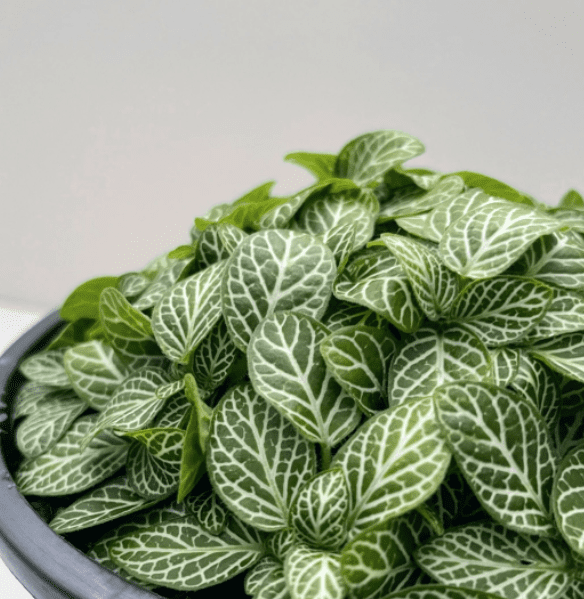
Fittonia albivenis, commonly known as the Nerve Plant, is one of the most reliable plants for humid terrarium environments. It is grown for its low, spreading habit and strongly veined foliage, and it is especially useful where colour, contrast and dense ground-level coverage are needed. Availability can vary, so current listings can be found here:
Fittonia albivenis on Etsy.
Fittonia albivenis summary
Fittonia is one of the clearest examples of a plant that performs better in a terrarium than it often does as a standard indoor pot plant. Stable humidity, reduced moisture loss and filtered light suit it extremely well.
Terrarium suitability overview
- Closed terrariums: Highly suitable
- Open terrariums: Suitable if humidity remains high
- Small sealed jars: Suitable if light and moisture are stable
- Paludariums: Suitable
Plant profile
- Difficulty: Easy in terrariums
- Growth rate: Slow to moderate
- Maintenance: Low
- Humidity: High
- Temperature: 18–26°C (64–79°F)
Terrarium suitability
Fittonia albivenis is highly suited to terrariums because it naturally prefers warmth, filtered light and consistently humid air. In closed terrariums, these conditions are easier to maintain than they are in open indoor settings.
It is especially useful in small to medium tropical terrariums where low-growing colour and pattern are needed without introducing a plant that climbs, trails aggressively or dominates the space.
Why use Fittonia albivenis
- One of the most dependable foliage plants for enclosed terrariums
- Strong leaf veining adds contrast and colour at ground level
- Spreads gently without overwhelming the entire build too quickly
- Works well in both simple and densely layered tropical designs
Where it works well
- Closed tropical terrariums
- Humid glass containers with indirect light
- Foreground and lower mid-layer planting
- Displays built around moss, small ferns and compact tropical foliage
Where it fails
- Dry open rooms without added humidity
- Direct sun through glass
- Terrariums allowed to dry out fully
- Waterlogged, stagnant substrate with no drainage strategy
Outside a terrarium, Fittonia often declines because the air is too dry and the moisture level is too inconsistent. Inside a stable terrarium, those problems are reduced significantly.
Climate and temperature
- Optimal range: 18–26°C (64–79°F)
- Lower threshold: around 17°C (63°F)
- Humidity: High
Warmth and humidity matter more than high heat. Sudden drops in temperature or cold draughts can slow growth and reduce leaf quality quickly.
Light requirements
- Bright to medium indirect light is ideal
- Lower light is tolerated, but colour and pattern may soften
- Direct sun can scorch foliage, especially in glass containers
Fittonia works best where light is diffused and stable rather than intense.
Water and substrate behaviour
Fittonia prefers evenly moist conditions and responds poorly to prolonged drying. It should not be kept waterlogged, but it also should not be allowed to dry out fully.
- Use a moisture-retentive but airy terrarium mix
- Keep the substrate consistently lightly moist
- Drainage layers help prevent stagnant conditions
- Charcoal can help in enclosed systems where moisture remains high
When Fittonia dries out, it often collapses dramatically. In many cases it can recover after watering, but repeated stress weakens the plant over time.
Growth behaviour in terrariums
- Low-growing and spreading rather than upright or trailing
- Stays relatively compact compared with many tropical companions
- Can gradually form a dense patch across the substrate surface
This makes it especially useful for softening hardscape edges and linking separate planting zones visually.
Placement within a terrarium
- Best used in the foreground or lower mid-layer
- Works well around moss, stones and wood features
- Useful for filling gaps between structural plants
- Not usually the right choice for a dominant central focal plant
Compatible plants
- Calathea musaica
- Leucobryum glaucum moss
- Small ferns
- Other compact humidity-loving tropical foliage
Compared to Calathea musaica, Fittonia is more forgiving and better suited to smaller or less stable terrarium environments. Compared to faster-growing trailing plants like Philodendron hederaceum, it is easier to control and less likely to dominate a build. When used alongside mosses such as Leucobryum glaucum, it adds structure and contrast without competing for space, making it one of the most reliable foreground plants in enclosed systems.
Lifespan in a terrarium
- Short-term display: Highly suitable
- Long-term enclosed terrarium: Highly suitable
- Requires occasional trimming to stay tidy
Maintenance and control
Fittonia is low-maintenance in a stable terrarium. Trimming is usually limited to tidying stems, removing damaged foliage or controlling spread at the edges of a planting.
Because it stays low and spreads gradually, it is usually easier to manage long term than most trailing terrarium plants.
Common issues
- Sudden wilting from dryness
- Leaf scorch from direct light
- Soft, weakened growth in overly dark conditions
- Decline in waterlogged substrate with poor airflow
Most problems come from moisture extremes rather than from the plant being inherently difficult.
Where to buy Fittonia albivenis
Fittonia is widely available, but quality and variety can vary. These sources provide consistent options:
Explore the terrarium plant library
Fittonia albivenis is one of the strongest plants for humid terrarium environments. For broader plant selection and compatibility, explore the full plant library: