Golden Pothos in Terrariums: Suitability, Growth and Long-Term Control
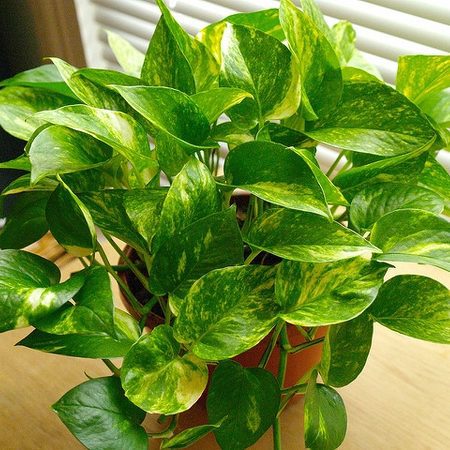
Golden Pothos (Epipremnum aureum), also commonly known as Devil’s Ivy, is one of the most widely used trailing plants in terrariums and glass planters. It is adaptable, easy to source and visually effective, but like other vining plants it is most successful when its scale and growth habit are taken seriously. Browse current listings here:
Golden Pothos on Etsy.
Golden Pothos summary
Golden Pothos is one of the easiest plants to establish in terrarium-style environments, but it is not one of the easiest to keep proportionate. It handles humidity and indoor conditions well, yet its vining habit means it is better in open terrariums, larger builds and glass planters than in small sealed jars.
Terrarium suitability overview
- Closed terrariums: Moderate fit
- Open terrariums: Good fit
- Small sealed jars: Not suitable
- Large glass builds: Works well with pruning
Common names and plant type
- Botanical name: Epipremnum aureum
- Common names: Golden Pothos, Devil’s Ivy, Pothos
- Plant type: Trailing tropical vine
The appeal of Golden Pothos in terrariums
Golden Pothos is popular because it brings immediate fullness and movement to a terrarium. Its yellow-green variegation brightens darker builds, and its adaptability means it settles in quickly under indoor conditions.
That same adaptability is also why it can become problematic. In a terrarium, a plant that grows well can easily become a plant that grows too much.
Choosing the right terrarium
If Golden Pothos is used in a terrarium, container size matters. Small sealed jars are usually a poor match because the plant grows too quickly and the stems soon outpace the design. Larger vessels, open glass planters or terrarium-style builds with more space are a better fit.
Drainage also matters. A drainage layer and a substrate that does not stay saturated help prevent waterlogged roots and reduce long-term problems.
Terrarium suitability
Golden Pothos is not a poor terrarium plant, but it is not a passive one. It succeeds where growth can be directed, trimmed and managed. In practical terms, that makes it stronger in open terrariums or larger glass builds than in small closed systems.
Its real advantage is resilience. Its real limitation is scale.
Climate and environmental requirements
- Temperature: 18–29°C (65–85°F)
- Humidity: Moderate to high
- Light: Bright indirect light, though lower light is tolerated
Bright indirect light keeps growth denser and helps maintain attractive foliage. Lower light will usually be tolerated, but growth may become leggier and the plant can lose some visual quality over time.
Lighting requirements
Golden Pothos is often described as a low-light plant, and that is true in the sense that it survives shade better than many species. Terrarium performance is different from mere survival, though. In bright indirect light, it stays fuller, tidier and more attractive.
Direct sun through glass should still be avoided, especially in enclosed containers, because heat and light intensity can build quickly.
Watering with care
Overwatering is one of the most common mistakes with Golden Pothos in terrariums. Enclosed environments recycle moisture efficiently, so watering should be lighter and less frequent than many people expect.
- Keep the substrate lightly moist
- Allow the top layer to dry slightly between waterings
- Avoid permanently wet conditions
- Reduce watering further in cooler or lower-light conditions
Golden Pothos is far more likely to struggle from excess moisture in a terrarium than from brief dryness.
Water and substrate behaviour
- Prefers a loose, well-draining substrate
- Should not sit in waterlogged soil
- Tolerates some drying better than many classic terrarium plants
- Works better in balanced systems than in constantly wet moss-heavy builds
This is one of the reasons it sits in the middle of the terrarium spectrum. It is easy to grow, but not perfectly matched to the permanently damp conditions that suit mosses and some smaller foliage plants.
Growth behaviour
- Moderate to fast vining growth
- Can trail or climb depending on placement
- Roots along stems when conditions are favourable
- Needs regular trimming to stay proportional
Within a terrarium, Golden Pothos can become unruly if left unchecked. Regular pruning is essential to prevent overcrowding and loss of structure.
Pruning and maintenance
Golden Pothos should be pruned regularly in a terrarium. Trimming controls length, prevents stems from smothering neighbouring plants and helps keep the foliage denser and bushier.
- Trim yellowing or damaged leaves
- Cut back overgrown vines before they dominate the container
- Use clean scissors or pruning snips
- Re-shape early rather than waiting for the plant to overtake the build
Fertilising
Fertilising should be used sparingly in terrariums. In semi-closed or closed systems, nutrients build up more easily, so light feeding during active growth is usually sufficient.
- Use a diluted balanced liquid fertiliser sparingly
- Only feed during active growth periods
- Avoid heavy feeding in enclosed builds
Over-fertilising in a terrarium can encourage excessive growth and make maintenance harder.
Why Golden Pothos is used in terrariums
- It is easy to source and easy to establish
- Variegated leaves brighten a planting
- Trailing stems soften hardscape and edges
- It tolerates indoor conditions better than many niche terrarium plants
Where it works well
- Open terrariums with good airflow
- Larger enclosed builds where pruning is expected
- Glass planters and terrarium-style shelf displays
- Edge placement where stems can trail naturally
Where it fails
- Small sealed jars
- Very wet stagnant terrariums
- Low-light builds where it becomes sparse and stretched
- Displays where a fast vine will overwhelm slower plants
The biggest limitation is not fragility. It is that Golden Pothos is often too successful for the space it is given.
Monitoring for pests and diseases
Even though Golden Pothos is hardy, it can still run into problems in terrarium conditions, especially if air movement is poor or moisture stays too high for too long.
- Mealybugs
- Spider mites, especially in drier setups
- Root rot from excess moisture
- Fungal problems in stagnant, overly wet environments
Quick intervention matters. In mixed collections, isolating an affected setup is sensible if pests appear.
Propagation
- Very easy to propagate from stem cuttings
- Cuttings root readily in water or moist substrate
- Pruned material can often be reused in the same design or elsewhere
This makes Golden Pothos easy to maintain, but it also reinforces how vigorous the plant can be. A plant that propagates this easily should not be treated like a slow terrarium filler.
Compatible plants
Compared to Fittonia, Golden Pothos is less moisture-dependent and much less likely to wilt dramatically, but it is far harder to contain. Compared to Philodendron hederaceum, it is similarly useful as a vine but often looks slightly coarser in smaller builds. Compared to Pearls and Jade Pothos, it is usually stronger and more vigorous, but also less refined visually in tightly controlled terrarium designs.
Lifespan in a terrarium
- Short-term: Good
- Long-term: Good in larger or open builds with regular pruning
Golden Pothos can last a long time in terrarium-style settings, but only when the design allows for its growth habit. In very small sealed environments, longevity often comes at the cost of appearance and balance.
Common issues
- Overgrowth and crowding
- Leggy or stretched vines in low light
- Root rot in saturated substrate
- Loss of balance in smaller builds
Most problems come from giving it the wrong type of terrarium, not from the plant being difficult.