Open vs Closed Terrarium: Which Type Do You Need?
If you’re new to the terrarium hobby, one of the first questions you’ll face is whether to build an open or closed terrarium. Both can look stunning, but they work very differently — and choosing the wrong one for your plants is one of the most common beginner mistakes. This guide breaks down everything you need to know so you can make the right call from the start.
What Is a Closed Terrarium?
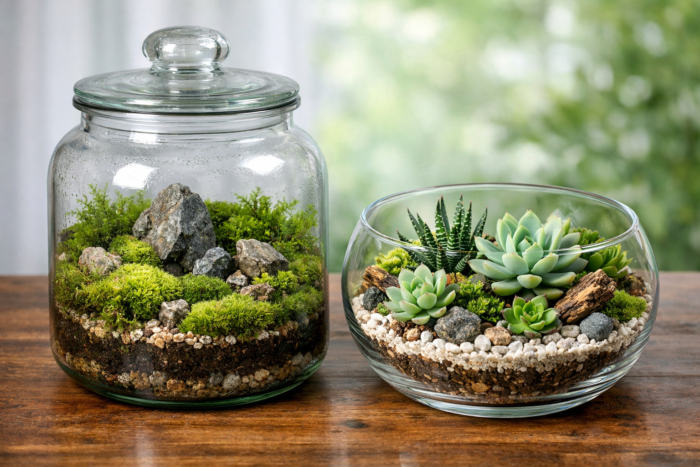
A closed terrarium is a sealed or lidded glass container that creates its own self-sustaining mini ecosystem. Water evaporates from the soil and plants, condenses on the glass walls, and drips back down — essentially a miniature water cycle running on repeat. When set up correctly, a truly closed terrarium may never need watering at all.
The best plants for closed terrariums are tropical, humidity-loving species such as mosses, ferns, fittonia, and peperomia. Keep closed terrariums out of direct sunlight — the sealed environment traps heat quickly, and direct sun can scorch your plants. A well-lit spot with indirect light is ideal. You can find detailed advice on placement and light in our Terrarium Care Guide.
If you’d like to try a closed build, this live moss closed terrarium kit on Etsy includes everything you need — glass jar, live moss, soil, activated carbon, drainage pebbles, tools and video instructions. There’s also this highly rated complete closed terrarium kit with live plants if you want a more comprehensive all-in-one option.
One thing to watch: if condensation builds up heavily on the glass, open the lid for 30–60 minutes to allow fresh air in and excess moisture to escape. A little condensation is normal; fogged-up walls that never clear is a sign of overwatering.
What Is an Open Terrarium?
An open terrarium has no lid, leaving it permanently exposed to the surrounding air. This means moisture evaporates freely, so plants are at greater risk of drying out — especially since most terrarium containers don’t hold a large volume of soil. You’ll need to water open terrariums more regularly, typically every one to two weeks depending on the plants and your local climate.
The trade-off is that open terrariums are generally more forgiving for beginners. There’s no risk of mould from trapped moisture, airflow keeps the plants healthy, and you have much easier access for pruning, watering, and rearranging your design. If you’re just getting started, our beginner terrarium supply list covers exactly what you need to get going.

Open vs Closed Terrarium: Key Differences at a Glance
| Open Terrarium | Closed Terrarium | |
|---|---|---|
| Watering | Every 1–2 weeks | Rarely — sometimes never |
| Humidity | Low — matches room air | High — self-sustaining |
| Best plants | Succulents, cacti, air plants | Ferns, mosses, fittonia |
| Mould risk | Low | Higher if overwatered |
| Maintenance | Regular watering; easy access | Minimal once balanced |
| Light | Bright, direct OK | Bright, indirect only |
| Best for | Beginners, dry climates | Hobbyists, humid rooms |
Best Plants for Open Terrariums
Because open terrariums are drier and have good airflow, the best plants are those that naturally prefer arid conditions. Browse our full Terrarium Plant Library for in-depth care guides on individual species.
- Succulents — Echeveria, Haworthia, Sedum, and Aloe are all excellent choices. Their fleshy leaves store water, making them naturally drought-tolerant and low maintenance.
- Cacti — Slow-growing and virtually care-free, cacti are one of the most reliable options for open terrariums. Use a sandy, well-draining substrate and water only when the soil is completely dry.
- Air Plants (Tillandsia) — These quirky plants require no soil at all. Remove them once a week and soak or mist them, then return them to the terrarium. See our Tillandsia air plant care guide for full details.
- Jade Plant (Crassula ovata) — A solid choice, though it needs more frequent watering than cacti. Don’t mix with cacti in the same container.
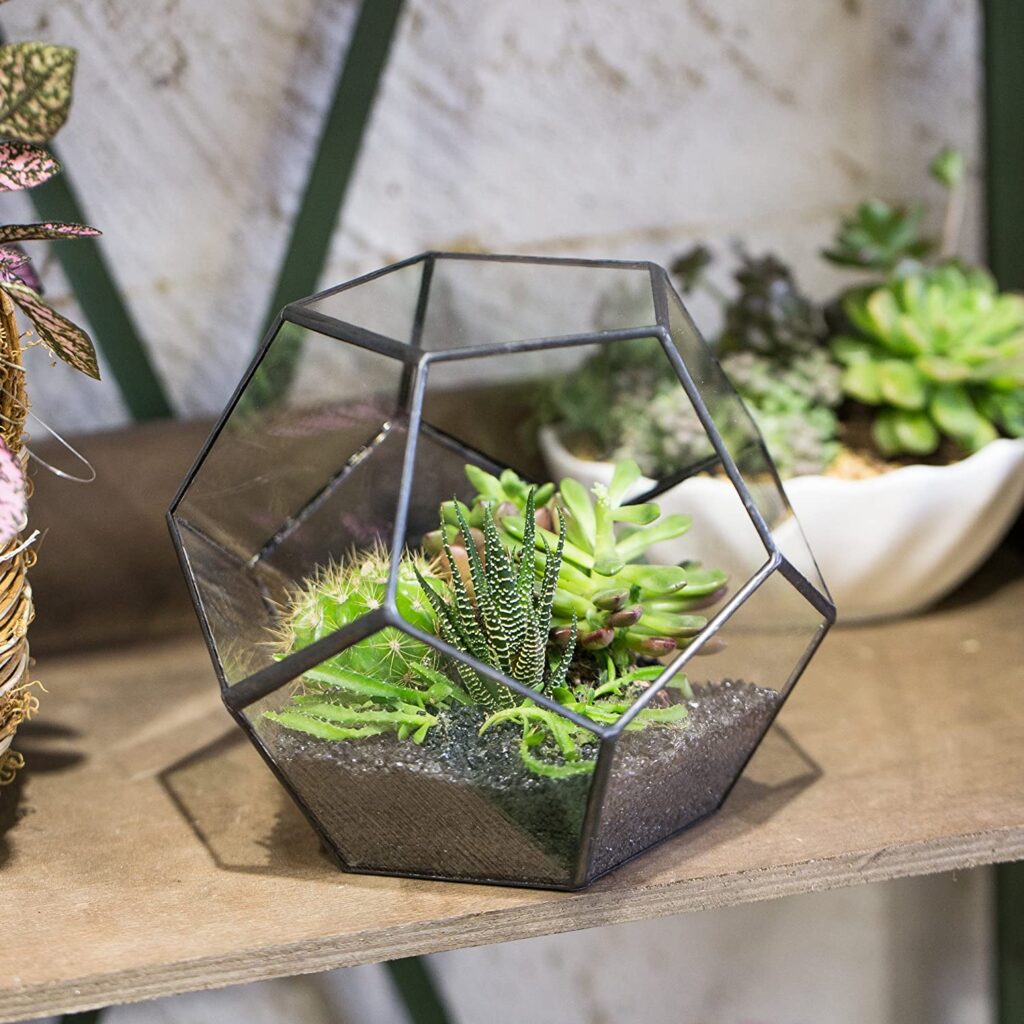
For open terrarium containers, this geometric glass open terrarium cube on Etsy is a great option for succulents, cacti and air plants — clean metal frame, thick glass, and an open top that provides the airflow these plants need. If you prefer something larger, this large hexagonal glass geometric terrarium (23cm tall, 26cm long) makes a striking centrepiece for a bigger succulent display.
Best Plants for Closed Terrariums
Humidity-loving tropical plants are the natural fit for sealed builds. Some of the most popular choices include mosses, ferns, fittonia, and peperomia. Moss in particular is a favourite — it’s easy to establish, looks great as ground cover, and thrives in the humid environment a closed container creates. We have a growing library of moss care guides including Thuidium delicatulum, Hypnum curvifolium (sheet moss), and Taxiphyllum barbieri — all excellent options for closed builds.
If you need live moss for your build, this bun moss terrarium kit with vintage glass jar from Etsy is well-reviewed and includes a chunky glass jar, potting materials, and live moss — suitable for moss, small ferns, and most terrarium plants.
Do Globe Terrariums Count as Open or Closed?
Globe-shaped terrarium containers sit somewhere in between. Even without a lid, the curved walls of a globe terrarium help trap some humidity — water vapour condenses on the inner glass and rolls back down into the soil, creating a partial terrarium effect. This makes globe containers a great middle-ground option if you want some of the self-sustaining benefits of a closed terrarium but prefer the look of an open design.
If you’d like to try a globe build, this 20cm handblown glass globe terrarium on Etsy is made from recycled glass and comes with a clear lid — use it sealed for a moss build or lidless for a semi-open succulent display. For more container shape inspiration, check out our geometric terrarium designs and terrarium design ideas pages.

Open Terrariums and Plant Growth
One of the creative advantages of open terrariums is that your plants aren’t confined. Trailing succulents and creeping plants can spill over the edge of the container, creating impressive miniature garden displays that evolve over time. This is much harder to achieve in a sealed environment where you’d need to open the lid to prune regularly.
Plant expert Tammy Sons notes that open terrariums are best placed in living rooms or bedrooms where the air is drier, while closed terrariums suit humid rooms like bathrooms. Ultimately, the right choice comes down to your preferred plants and your lifestyle — neither type is inherently better than the other.
Open Terrarium Care Tips
- Water every 1–2 weeks, or when the top layer of soil feels dry
- Use a well-draining substrate — a sandy or gritty mix works well for succulents and cacti. See our essential terrarium building supplies guide for substrate recommendations
- Place in bright light; most open terrarium plants love direct sun
- Don’t overcrowd plants — good airflow between them reduces the risk of pests and rot
- Dust or wipe the glass occasionally to keep it looking its best
For a full walkthrough of how to set up and maintain any terrarium, our 5-step terrarium care guide is a great place to start. And if you want to plan out your build before buying anything, try our interactive Terrarium Builder — it generates a personalised shopping list based on the container and plants you choose.
More Open Terrarium Inspiration
Looking for container ideas? Open terrariums can be created in everything from geometric glass frames and fish bowls to vintage apothecary jars and hanging orbs. The container you choose will shape the whole aesthetic of your build — check out some of our favourite open terrarium designs below. You can also browse the full range of terrarium containers on Etsy — there’s a huge variety of styles from independent makers.
Frequently Asked Questions
Do terrariums need to be enclosed?
No — terrariums do not need to be enclosed. Open terrariums work well for a wide range of plants, particularly succulents, cacti, and air plants. Closed terrariums are better suited to tropical, humidity-loving plants and require less watering.
Which is easier to maintain — open or closed?
Open terrariums are generally considered easier for beginners because there’s no humidity balance to manage. Closed terrariums require more careful initial setup, but once balanced they are extremely low maintenance. Our Terrarium FAQ covers many more common questions like this.
Can I convert an open terrarium to a closed one?
Yes, if your container has a lid option. However, you’d need to swap out any dry-condition plants (succulents, cacti) for humidity-loving species like ferns or mosses before sealing it.
How often should I water an open terrarium?
For a typical succulent or cactus open terrarium, watering every one to two weeks is a good starting point. Always check that the soil is fully dry before watering again to avoid root rot. For more detailed watering advice, visit our Terrarium Care Guide.