Starting a terrarium looks simple — a jar, some plants and soil. But most first terrariums fail within a few weeks, and it usually isn’t because the plants were difficult.
It happens because the setup was wrong from the beginning.
We regularly see beginners start with decorative bowls, normal potting soil and no planting tools. The result is constant watering, mould growth or plants that slowly decline.
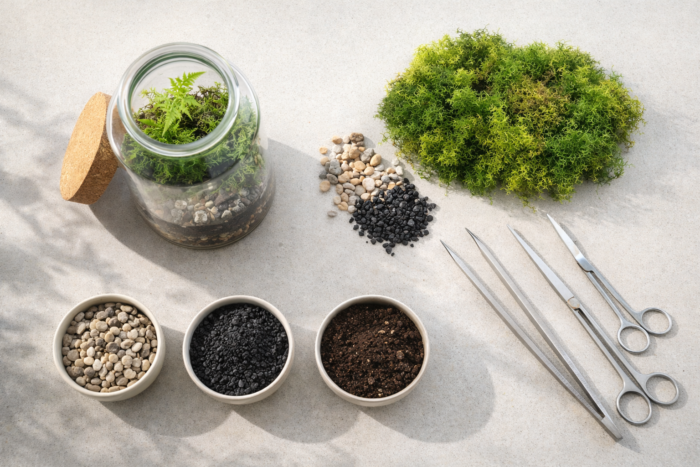
The good news is you don’t need many items. A stable closed terrarium only requires a small group of specific supplies.
This guide shows exactly what to get first — and what you can safely ignore until later.
Quick Checklist (Save This)
To build a reliable beginner terrarium you only need:
- A sealed glass container
- A drainage and substrate layer
- Moss or humidity-tolerant plants
- Long tweezers or planting tools
Everything else is optional decoration.
If you get these four things right, your terrarium is very likely to succeed.
1. The Container (Most Important Decision)
Closed Glass Jar Terrarium
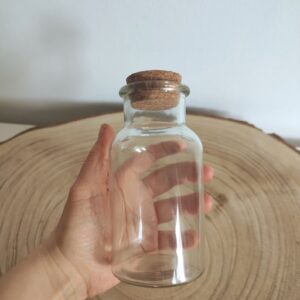
If you only choose one thing carefully, make it the container.
For beginners we strongly recommend a sealed jar rather than an open bowl. A closed container traps moisture and creates a humid micro-climate. The water cycles naturally inside the ecosystem, so you rarely need to water and plants experience far less stress.
Open containers look attractive but dry quickly. This leads to frequent watering and is the most common reason beginner terrariums fail.
Choose this if:
- this is your first terrarium
- you want low maintenance
- you plan to use moss or small ferns
Avoid if:
- you want succulents or cacti (they need dry air)
A good container alone solves half the problems beginners run into.
2. The Soil Layer (The Hidden Cause of Most Failures)
Terrarium Substrate Layering Kit
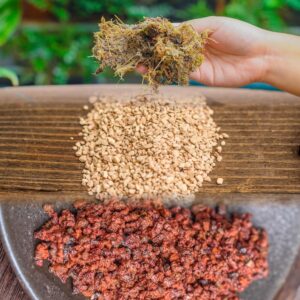
Most people use ordinary potting mix and wonder why their terrarium develops mould or smells damp.
Terrariums need a layered base:
drainage → separation → substrate.
This prevents stagnant water collecting around the roots. Without it, excess moisture has nowhere to go and plants slowly rot.
A prepared substrate kit removes the guesswork and dramatically improves stability in the first month.
If your last terrarium failed, this is often the missing piece.
3. The Plant Cover (What Makes It Feel Alive)
Live Sheet Moss
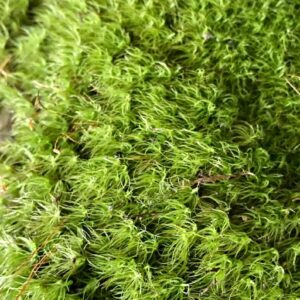
Moss is one of the easiest and most reliable additions to a closed terrarium. It tolerates humidity, stabilises moisture levels and instantly gives a natural forest-floor appearance.
It also acts as a visual indicator.
If the moss looks healthy, your environment is balanced.
Many beginners start with too many plants. A simpler approach — moss plus one or two small plants — is usually more stable and easier to maintain.
4. The Tools (You Will Need These)
Terrarium Tool Kit
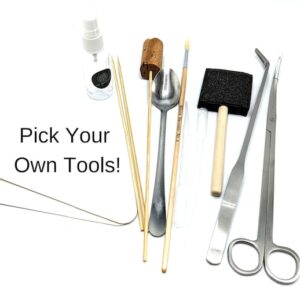
This is the item beginners most often skip — and then immediately realise they need.
Planting through a narrow jar opening with your fingers disturbs the soil layers and damages plants. Long tweezers allow accurate placement without collapsing the drainage system you just built.
They also make maintenance possible later. You will occasionally need to remove dead leaves or reposition growth, and proper tools prevent dismantling the whole terrarium.
5. The Easiest Starting Option
Complete DIY Terrarium Kit
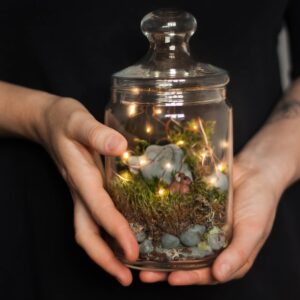
If you’re unsure about sourcing materials individually, a complete kit is the safest starting point.
A kit combines the correct container size, substrate layers and planting materials. It removes the most confusing part of the process and greatly increases first-time success.
We often suggest beginners start with a kit and then build their own terrariums once they understand how the ecosystem behaves.
What You Don’t Need Yet
Many beginners feel they must buy decorative stones, figurines, lighting or multiple plant species immediately.
You don’t.
A simple setup almost always performs better than a complex one. After a few weeks you can add decoration safely once the environment stabilises.
The first goal is not appearance — it’s balance.
Final Advice
If you follow only one rule, follow this:
Start simple and let the ecosystem settle.
A sealed container, proper substrate layers, moss and planting tools are enough to build a terrarium that largely maintains itself. Once established, you’ll find it requires surprisingly little attention.
You can explore the recommended items above to compare options and see current availability from independent Etsy sellers.